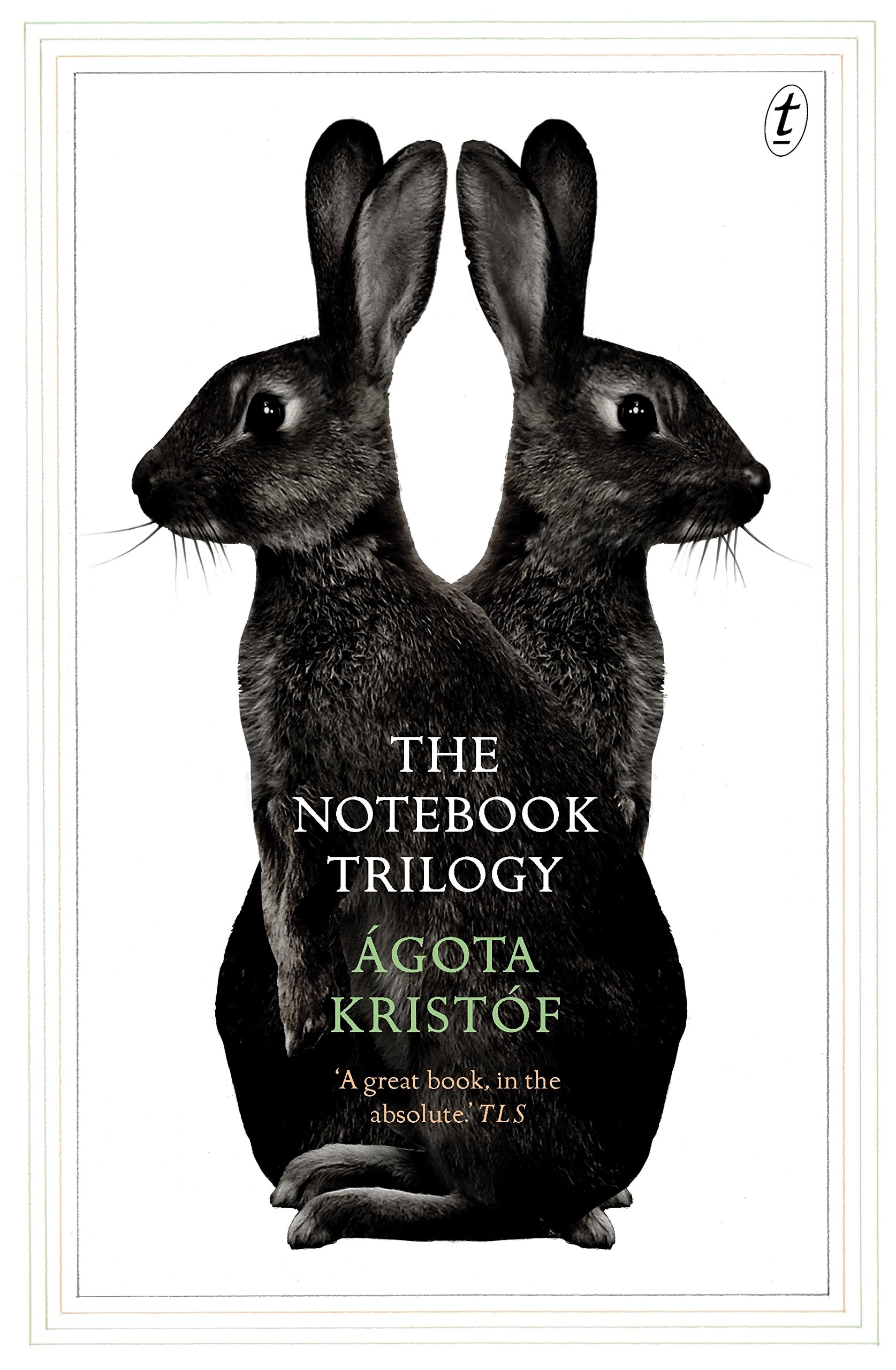
The Notebook Trilogy The Notebook, The Proof, The Third Lie
- Yayıncı
- Text Publishing Company
- Sayfa
- 480
- Dil
- English
- Yayın yılı
- 2016-03-29
Özet
<i>The child says, ‘That’s the only difference between the dead and those who go away, isn’t it? Those who aren’t dead will return.’ Lucas says, ‘But how do we know they aren’t dead when they’re away?’ ‘We can’t know.’</i><p> Claus and Lucas are twins. Their new life begins when they are left with their grandmother, the ‘Witch’, in a village in an occupied country. It’s wartime. All their actions are based on the necessity to survive. They create an exercise regime to toughen up, and record the results in a notebook. Their angelic looks are deceiving. They are implacable, dangerously ethical; their code of life demands that they help a deserter, or blackmail a priest, or come to the aid of a prostitute, or assist in a suicide. What motivates them is a deeply embedded morality of absolute need.</p> <p> The trilogy—<i>The Notebook</i> (1986), <i>The Proof</i> (1988), and <i>The Third Lie</i> (1991)—follows their stories from the Second World War, through the years of communism and into a fractured Europe. In what could be seen as an allegory of post-war Europe, Claus and Lucas, locked in a tortuous bond, become separated and are isolated in different countries. They yearn to be connected again, but perspectives shift, memories diverge, identity becomes unstable. </p> <p> Written in Kristof ’s spare, direct style,<i> The Notebook Trilogy </i>is an exploration of the aftereffects of trauma and of the nature of storytelling. Kristof’s language is both accessible and matter-of-fact, as well as odd and unsettling. The novels explore truth and lies, shaped by a breathtaking artistic vision that is shocking, fascinating and utterly memorable. </p>
Bu kitap hakkında gönderiler
Bu kitap hakkında henüz gönderi yok. Uygulamada ilk paylaşan sen ol!


