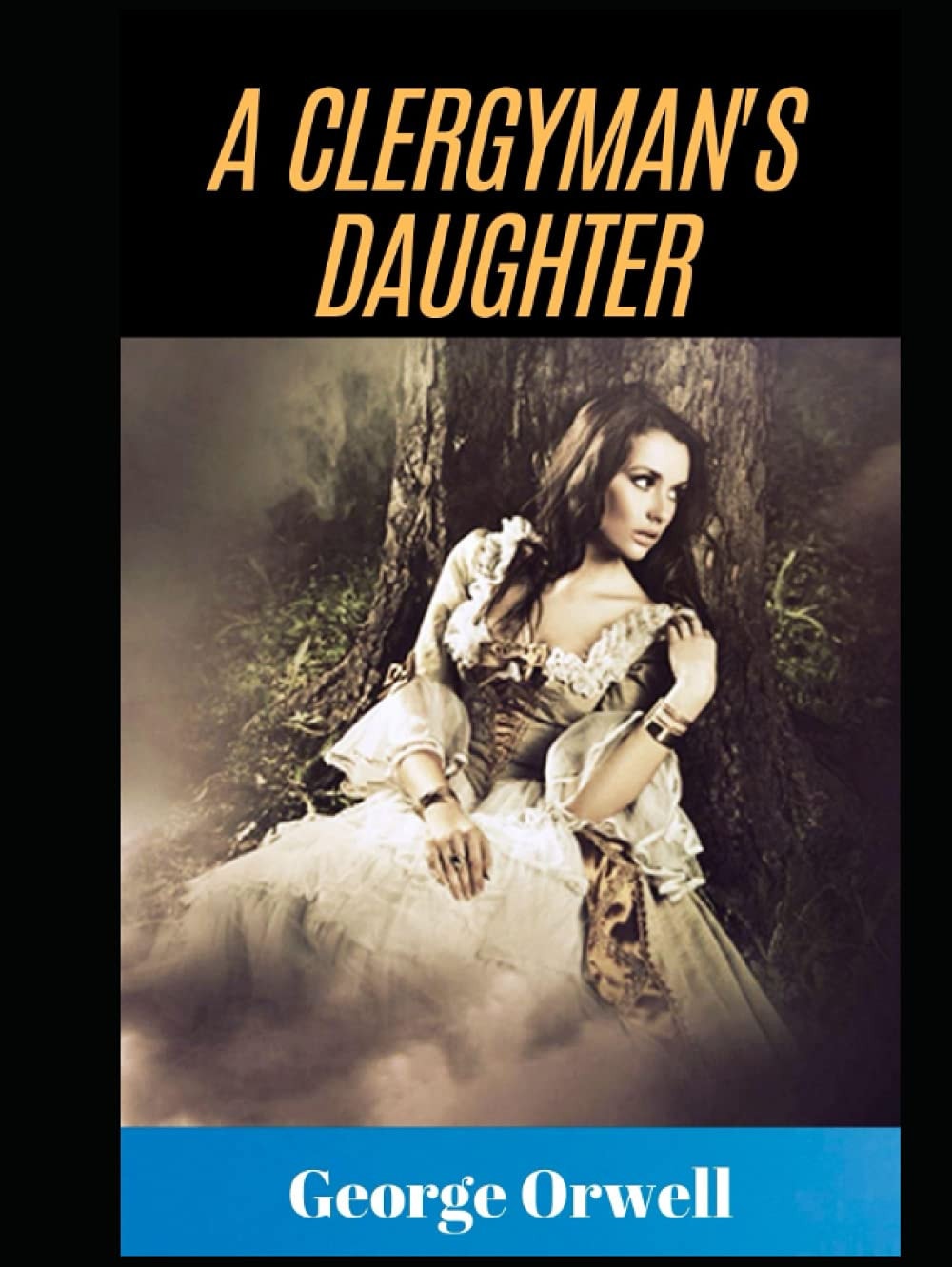
A Clergyman's Daughter
- Yayıncı
- Independently published
- Sayfa
- 351
- Dil
- English
- Yayın yılı
- 2021-09-19
Özet
Product Description<br/><br/><br/> A Clergyman's Daughter is a 1935 novel by English author George Orwell. It tells the story of Dorothy Hare, the clergyman's daughter of the title, whose life is turned upside down when she suffers an attack of amnesia. It is Orwell's most formally experimental novel, featuring a chapter written entirely in dramatic form, but he was never satisfied with it and he left instructions that after his death it was not to be reprinted. Despite these instructions, Orwell did consent that to cheap editions "of any book which may bring in a few pounds for my heirs" following his death.<br/><br/> Book Summary: <br/> The story is told in five distinct chapters: <br/><br/> Chapter 1<br/> A day in the life of Dorothy Hare, the weak-willed daughter of a disagreeable widowed clergyman. Her father is Rector of Knype Hill, a small town in East Anglia. She keeps house for him, fends off creditors, visits parishioners and makes costumes for fund-raising events. Throughout she practises mortification of flesh to be true to her faith. In the evening she is invited to dinner by Mr Warburton, Knype Hill's most disreputable resident, a middle-aged bachelor who is an unashamed lecher and atheist.<br/><br/> Chapter 2<br/> Dorothy is transposed to the Old Kent Road with amnesia. Eight days of her life are unaccounted for. She joins a group of vagrants, comprising a young man named Nobby and his two friends, who relieve her of her remaining half-crown and take her with them on a hop-picking expedition in Kent.<br/><br/> Chapter 3<br/> Dorothy spends the night sleeping rough in Trafalgar Square in a chapter presented entirely as dramatic dialogue. After spending ten days on the streets, she is arrested for vagrancy and ends up in a police cell for twelve hours for failure to pay the fine.<br/><br/> Chapter 4<br/> Dorothy believes that her father, distraught at the rumours of her running away with Mr Warburton, has ignored her letters for help. In fact he has contacted his cousin Sir Thomas Hare, whose servant locates her at the police station. Hare's solicitor procures a job for her as a "schoolmistress" in a small "fourth-rate" private girls' "academy" run by the grasping Mrs Creevy. Dorothy's attempts to introduce a more liberal and varied education to her students clash with the expectations of the parents, who want a strictly "practical" focus on handwriting and basic mathematics. <br/><br/> Chapter 5<br/> Shortly after Dorothy steps out of the door of the school Mr Warburton turns up in a taxi to say that Mrs Semprill has been charged with slander, and that her malicious gossip has been discredited. He has come, therefore, to take her back to Knype Hill. On the trip home he proposes marriage. Dorothy rejects him, recognising but disregarding his argument that, with her loss of religious faith, her existence as a hard-working clergyman's daughter will be meaningless and dull, and that marriage while she is still young is her only escape.<br/><br/><br/>Review<br/><br/><br/>"Nothing in the world is quite so irritating as dealing with mutinous children."<br/><br/>"The parents sat round watching, and in their crass faces-faces not harsh or evil, only blunted by ignorance and mean virtues-you could see a solemn approval, a solemn pleasure in the spectacle of sin rebuked."<br/><br/>"Now then, Dorothy! No snivelling, please! It all comes right somehow if you trust in God. Matthew vi. 35. The Lord will provide."<br/><br/> ― George Orwell, A Clergyman's Daughter<br/><br/><br/>About the Author<br/><br/><br/>Who Was George Orwell? George Orwell was an English novelist, essayist and critic most famous for his novels 'Animal Farm' (1945) and 'Nineteen Eighty-Four' (1949). George Orwell was a novelist, essayist and critic best known for his novels Animal Farm and Nineteen Eighty-Four. He was a man of strong opinions who addressed some of the major political movements of his times, including imperialism, fascism and communism. Family & Early Life: Orwell was born Eric Arthur Blair in Motihari, India, on June 25, 1903. The son of a British civil servant, Orwell spent his first days in In
Bu kitap hakkında gönderiler
Bu kitap hakkında henüz gönderi yok. Uygulamada ilk paylaşan sen ol!


