
Hayrettin Aydın@aydin00· 8ay🇹🇷
en büyük varoluşsal sancıları çeksen ölümden çok korksan hayatın anlamını sorgulayıp ızdırap çeksen bile sevdiklerinle geçirdiğin güzel bir an bunların hepsini anlamsız kılar
4

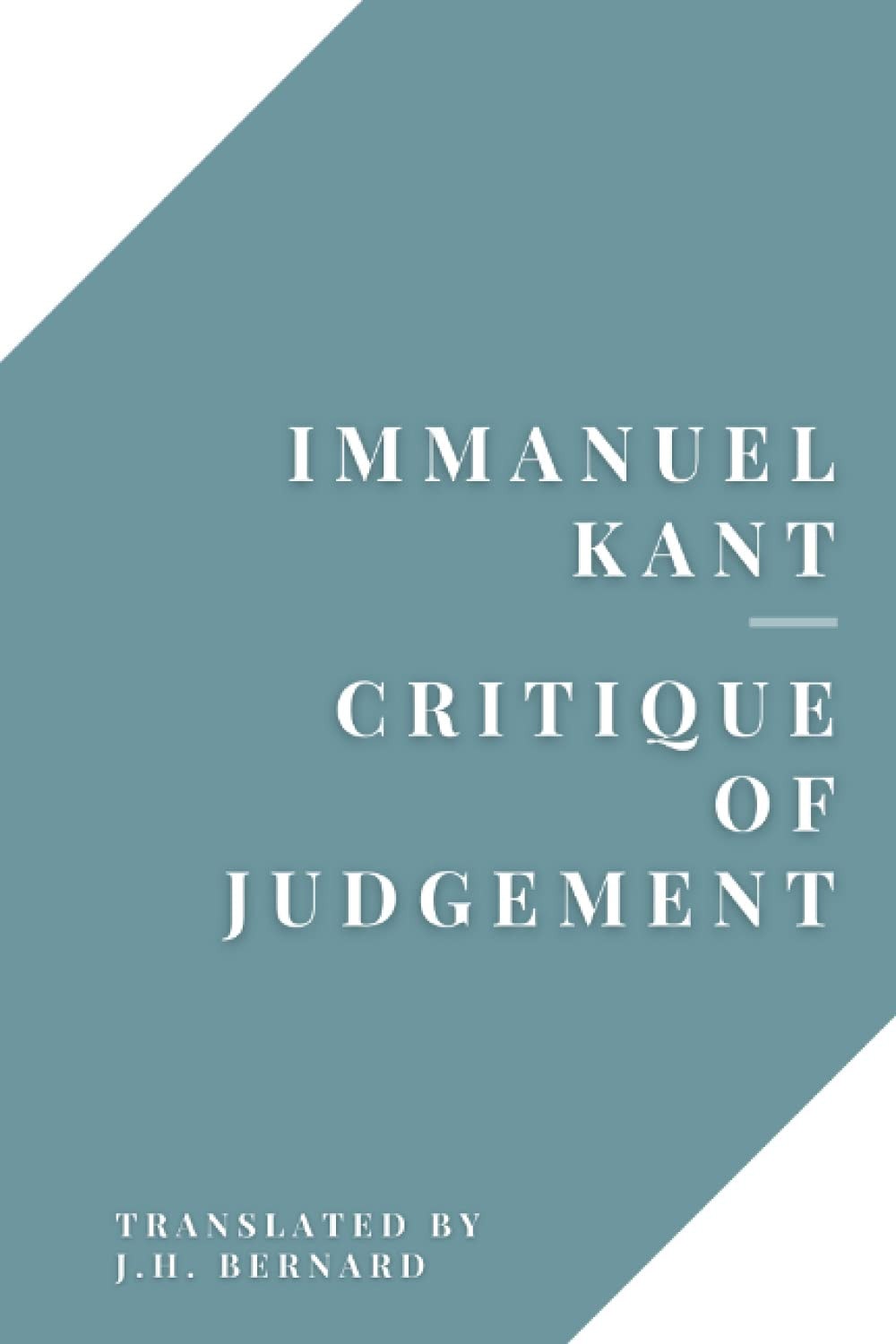
A new edition of Immanuel Kant's influential philosophical treatise Critique of Judgement, originally published in 1790, constituting Kant's major contributions to the fields of aesthetics and teleology. Critique of Judgementis the third of Kant's critiques and is divided into two main sections: the Critique of Aesthetic Judgment and the Critique of Teleological Judgment, and also includes a large overview of the entirety of Kant's Critical system, arranged in its final form. When read together with Kant's Critique of Pure Reason and Critique of Practical Reason, the Critique of Judgement remains among the most enduringly influential and important works of modern Western philosophy.<br/><br/>This edition is based on the second edition of J. H. Bernard's translation of the second edition of Kant's work, and includes Bernard's footnotes and annotations. John Henry Bernard (1860-1927) was an accomplished scholar in both theology and philosophy who also served as the Anglican Bishop of Ossory and later Archbishop of Dublin.<br/><br/>Immanuel Kant (1724-1804) is widely considered to be one of the greatest thinkers of all time and one of the most important figures in Western philosophy. He is best known for his seminal work, the Critique of Pure Reason, which is credited with revolutionizing philosophical thought and laying the foundations for modern philosophy. Kant's philosophy was deeply rooted in the Enlightenment tradition and focused on the concept of universal morality and the power of reason. He believed that all humans have a moral obligation to obey certain laws, and that these laws should be based on rational principles. Kant also argued that all knowledge comes from experience, and that the ultimate truth lies in a synthesis of intuition and reason. Further, he argued that morality must be based on universal principles, rather than on subjective considerations. Kant's work has had a profound impact on the development of many philosophical schools of thought, including Kantianism, Neo-Kantianism, and Post-Kantianism. His influence continues to be felt in many fields, from philosophy to theology and beyond.
Bookspace topluluğundan 1 gönderi
en büyük varoluşsal sancıları çeksen ölümden çok korksan hayatın anlamını sorgulayıp ızdırap çeksen bile sevdiklerinle geçirdiğin güzel bir an bunların hepsini anlamsız kılar


