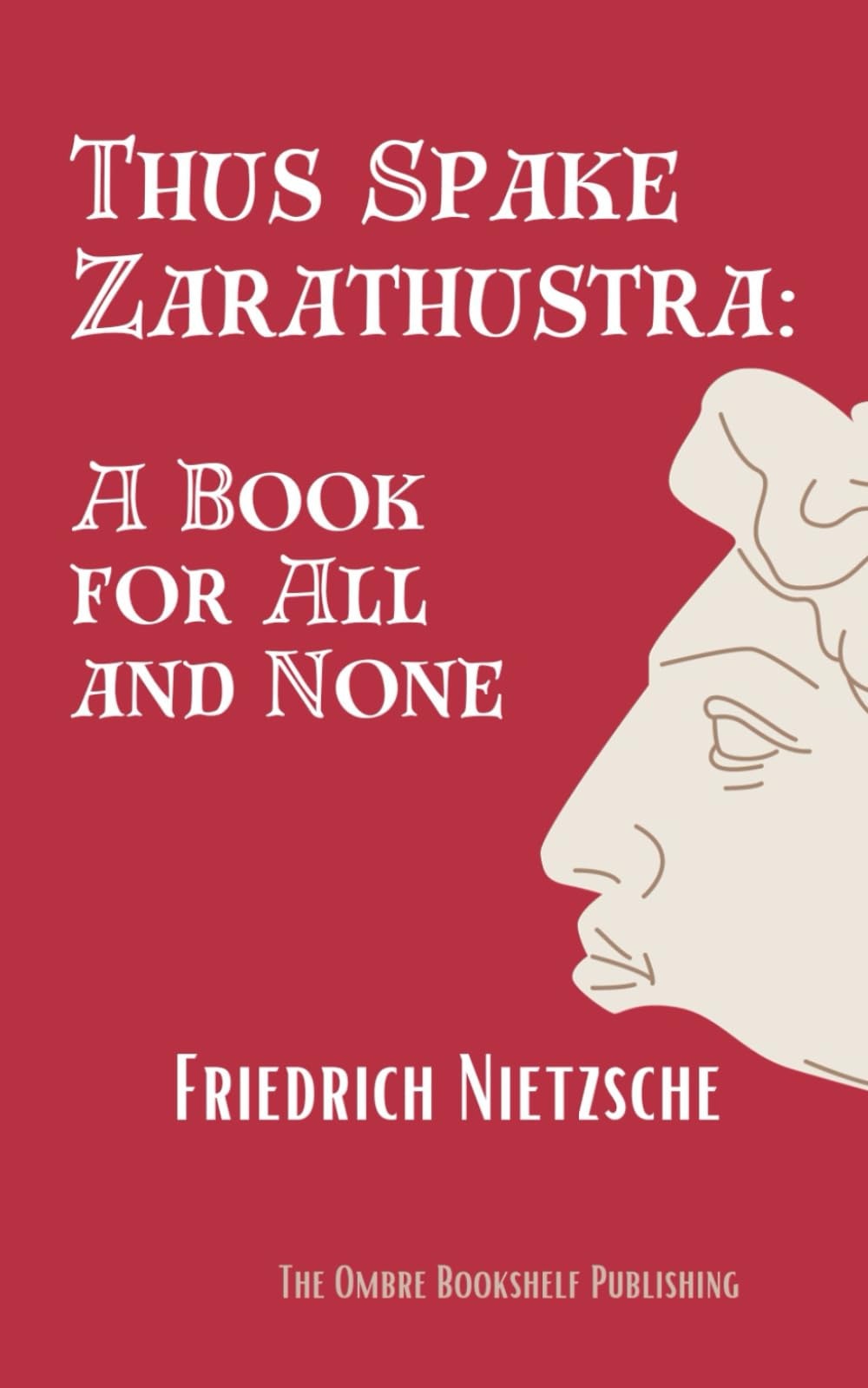
Thus Spake Zarathustra A Book for All and None
- Publisher
- Independently published
- Pages
- 300
- Language
- English
- Published
- 2024-01-16
Overview
Thus Spoke Zarathustra is a seminal work of philosophy by Friedrich Nietzsche, widely considered one of the greatest thinkers of the 19th century. This profound and thought-provoking book is a meditation on the meaning of life, the purpose of existence, and the nature of morality.<br/>Nietzsche's famous declaration, "God is Dead," serves as the cornerstone of this work and challenges traditional beliefs about spirituality and religion. Throughout the book, Zarathustra, Nietzsche's allegorical figure, embarks on a journey of self-discovery, examining the human condition and exploring the essence of the individual spirit.<br/>With its emphasis on individualism, self-discovery, and the rejection of traditional morality, "Thus Spoke Zarathustra" is a powerful and timeless work that continues to inspire and challenge readers to this day. Whether you are a philosophy student, an admirer of classic literature, or simply someone seeking to broaden your understanding of the world, this book will surely provide valuable insights and thought-provoking ideas.<br/><br/>After ten years of solitude in a cave high in the mountains, Zarathustra wishes to share the wisdom he has accumulated during this time with humanity. He reaches the nearest town and addresses the crowd in the marketplace. He tells them of the Overman: the next step in human evolution, a being who creates their own values, freed from the weight of tradition and morality and takes responsibility for their own successes and failures. But the crowd doesn’t understand him; his discourse is met only with rude ignorance. Zarathustra then gathers a small group of disciples and shares his wisdom with them.<br/>The bulk of the book is Zarathustra’s speeches on topics such as morality, society, individualism, religion, and how suffering and its overcoming are what give meaning to our existence. While already wiser than most, Zarathustra still learns from those he talks to, re-evaluating his thoughts as he deals with disappointment (such as when his disciples prove to be mere followers), and confronting his own doubts. His greatest challenge comes when he faces the existential test of the eternal recurrence of the same: the thought that our lives could repeat indefinitely without the minutest of change.<br/>Zarathustra didn’t find its scholarly fame limited to Europe: soon after its publication, it reached Asia, where it was received with enthusiasm, particularly in China and Japan where it influenced the famous Kyoto School. Zarathustra has also received special attention from the music world. Nietzsche loved music and poetry, and it was his wish that this book be taken as music. No fewer than 87 pieces have been inspired by the book, in part or as a whole. The best known are Richard Strauss’ Also Sprach Zarathustra, the fourth movement of Gustav Mahler’s Symphony No. 3, and Frederick Delius’ A Mass of Life.<br/><br/>A true classic that belongs on every bookshelf!
Posts about this book
No posts about this book yet. Be the first in the app!


