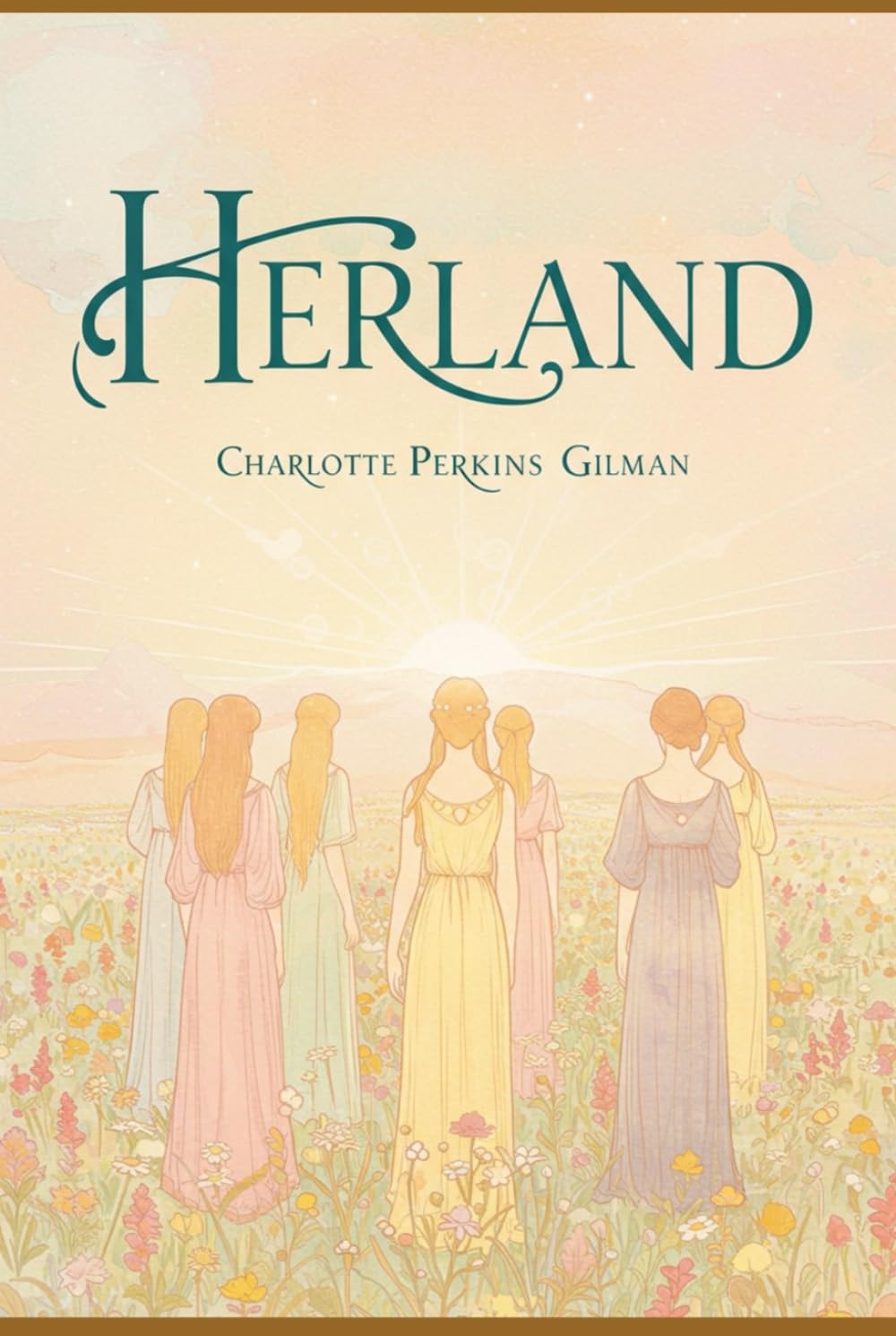
Herland
- Publisher
- Independently published
- Pages
- 143
- Language
- English
- Published
- 2025-10-02
Overview
Nobody likes feminists. You know it's true. Even in 2015, the word feminism still has a chilling effect on most rooms: in certain internet circles, it's thrown around like a slur; female pop stars and actors bend over backwards to emphasise that they're into equality and stuff, but not in a scary way. Cultural messaging is powerful, and for decades (centuries?) the message, not coincidentally, has been that being a feminist is profoundly not cool. It's not "cool" to call out your friend's racist joke. It's not "cool" to complain about sexism in the current blockbuster movie. Body positivity is not a "cool" segment of identity politics. "Cool" people let things go. "Cool" girls don't complain.As a loud, stubborn, happily non-cool girl, I've grown accustomed to almost never seeing myself represented in media (except as a hairy, bra-burning punchline). I think that's what is so deeply, viscerally empowering about Charlotte Perkins Gilman's 1915 novella Herland, in which three swaggering male explorers discover a lost civilization populated entirely by women. Though it reads like a plucky sci-fi adventure serial, at Herland's heart is an unapologetically feminist treatise. Gilman goes for it in a way that even some 21st-century progressives shy away from in the name of diplomacy.The narrator, Vandyck "Van" Jennings, and his two companions, Terry O Nicholson and Jeff Margrave, are such perfect, brutal caricatures of masculinity, they feel fresh and relevant enough to populate any sarcastic modern-day feminist blog post. Terry is all puffed-up sexual entitlement; Jeff oozes chivalric "nice guy" condescension; and Van is your bog-standard faux-innocent demanding to be educated.These are tropes that I still see actual human men falling into now, 100 years later, in my social media feeds and in my physical life. Just look at the language they use, speculating about what they might find once they reach Herland - so imperious, so presumptuous: "'They would fight among themselves, ' Terry insisted. 'Women always do. We mustn't look to find any sort of order and organization.''You're dead wrong, ' Jeff told him. 'It will be like a nunnery under an Abbess - a peaceful, harmonious sisterhood.'I snorted derision at this idea.'Nuns, indeed! Your peaceful sisterhoods were all celibate, Jeff, and under vows of obedience. These are just women, and mothers, and where there's motherhood you don't find sisterhood - not much.''No, sir - they'll scrap, ' agreed Terry. 'We mustn't look for inventions and progress; it'll be awfully primitive.'"What they find, of course, confounds all of those expectations. Herland is a paradise: no war, no crime, no hunger, no waste, no vanity, no jealousy, no heartbreak. The nation functions, essentially, as one cohesive family unit (albeit a family with three million members). Everyone is valued, everyone is cared for, everyone is a vegetarian, and everyone wears flattering but unisex woven tunics. Technology, education and art all flourish. Sisters are doing it for themselves, and they're doing it better.AdvertisementThe brazen suggestion that a world peopled only with women (men phased out even from procreation) would be not only functional, but a flawless, gleaming, quasi-socialist utopia is an exhilarating bit of constructive hyperbole. It has shades of Ruth Bader Ginsburg's famous comment that the Supreme Court will finally have "enough" female justices "when there are nine". After all, Ginsburg explained, "For most of the country's history, there were nine and they were all men. Nobody thought that was strange." In a culture so circumscribed by male fear (of obsolescence, of loss of power, of girls in the clubhouse) that even something as innocuous as an all-female Ghostbusters reboot caused widespread teeth-gnashing, it's vital to lodge this message in the public consciousness:
Posts about this book
No posts about this book yet. Be the first in the app!


