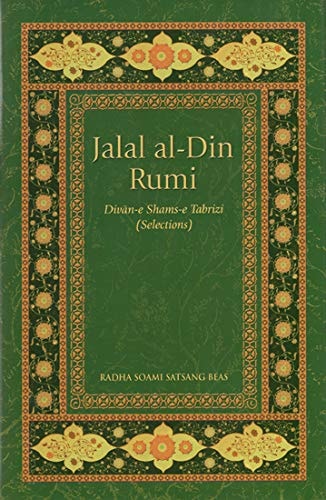
Jalal Al-Din Rumi Divān-e Shams-e Tabrizi (selections)
by Jalāl al-Dīn Rūmī (Maulana)
- Publisher
- Radha Soami Satsang Beas
- Pages
- 397
- Language
- English
- Published
- 2019
Overview
Language: English<br/>Pages: 398<br/><br/>About the Book<br/><br/>Everyone and everything perishes,<br/>but celebration in your state of oneness<br/>is forever, forever, forever."<br/><br/>Today, more than seven hundred years after he composed his<br/>works, Jalal al-Din Muhammad Rumi - known affectionately<br/>simply as Rumi is the worlds most recognized and revered poet.<br/>Athirteenth-century Sufi mystic, Rumi has become a twenty-first-<br/>century bestselling author. Although misquoted nearly as often<br/>as he is quoted, Rumi is universally considered a poet of love, his<br/>words giving shape to the ache of longing, the pain of separation,<br/>and the ecstasy of union with the beloved. For Rumi, the path<br/>to the divine transcended creed and was accessible to any lover,<br/>regardless of culture or social order. "My religion," he wrote, "is<br/>love."* This message has resounded like a heartbeat through the<br/>centuries, appealing to todays seekers of love from all walks of life,<br/>much as it did in Rumi's own time.<br/><br/>Rumi, a highly educated and respected religious scholar,<br/>Islamic jurist, and Muslim preacher, was in his late thirties before<br/>he ever composed a line of poetry. It was then that he met Shams-e<br/>Tabrizi and verse began to pour from him. The selections in this<br/>book are taken from that fount, the Divan-e Shams-e Tabrizi, where<br/>more than 44,000 lines of poetry, dictated or sung by Rumi, capture<br/>the love between Rumi, the student, and his teacher Shams-e<br/>Tabrizi, the anguish of estrangement, and the journey to union<br/>with the beloved.<br/><br/>Nearly three thousand of those lines were chosen for their elegance,<br/>their imagery, and their focus on the spiritual path, as well as<br/>the inner practice of meditatio
Posts about this book
No posts about this book yet. Be the first in the app!


