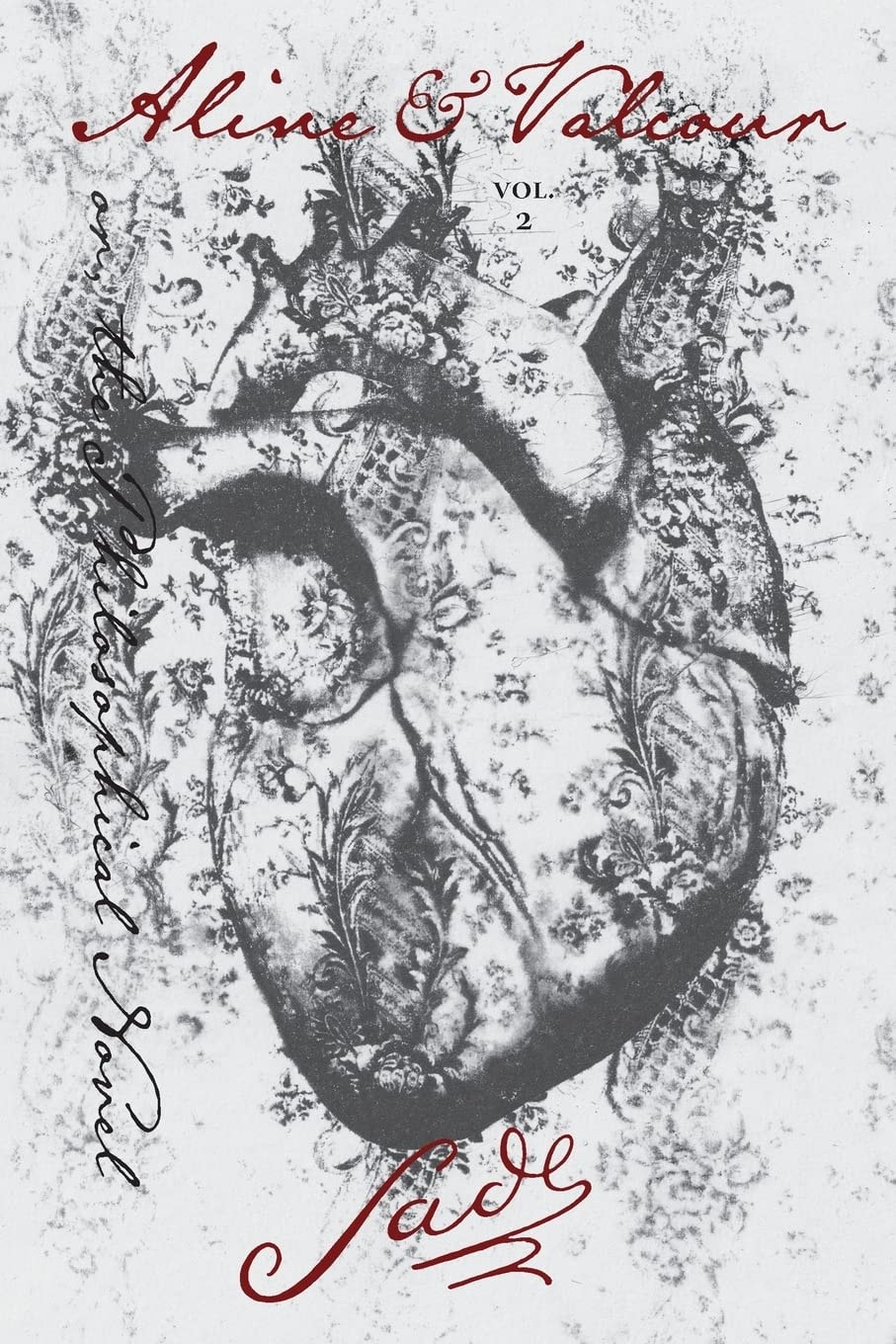
Aline and Valcour, Vol. 2 Or, the Philosophical Novel
- Publisher
- Contra Mundum Press
- Pages
- 260
- Language
- English
- Published
- 2019
Overview
"Set against the impending riptide of the French Revolution and composed while Sade was imprisoned in the Bastille, Aline and Valcour is a sprawling and intellectually sweeping work. Unlike 120 Days of Sodom, the famous scroll that lay concealed in his cell as he wrote, while not pornographic, Aline and Valcour embodies the multiple themes and ideas that would become the hallmark of Sade's far more sulfurous Juliette and Philosophy in the Bedroom. Ostensibly an epistolary novel, Aline and Valcour actually combines genres, interweaving the adventure story, libertine novel, and the novel of feelings out of which emerges a unitary tale enlivened by complex and carefully nuanced characters. Turbulence and turpitude disrupt good peoples' lives as libertines work evil schemes and incestuous designs upon the innocent and devout and they don't stop with abduction and seduction; its protagonists face obstacles to love and harsh threats imposed by crime upon traditional morality and religion. Embedded within Aline and Valcour are sojourns in two exotic lands in Africa and the South Seas: Butua, a brutal cannibalistic dystopia, and Tamoé, a utopian paradise headed by a philosopher-king. In Butua, a brutal chief and priesthood rule over a cowed and doomed populace, and the most atrocious crimes are committed in broad daylight, while in Tamoé, happiness and prosperity flourish amidst benevolent anarchy. Sade infuses his novel with a sort of philosophical anthropology that prefigures not just Karl Marx and the 19th century utopian socialists, but Claude Levi-Strauss and Michel Foucault. Dark humor and social satire echo throughout. Sade's inspirations for Aline and Valcour, which signal his ambition for what he subtitled "the philosophical novel," include an array of novels in addition to Richardson's epistolary Pamela, Rousseau's best-selling Julie, Laclos' Les liaisons dangereuses, Gulliver's Travels, and Don Quixote. Aline and Valcour also owes a special debt to the an ancient Roman poet Lucretius, whose Epicurean and materialist philosophy lends it a contemporary feel wholly missing from many 18th century novels. Although not sexually explicit, Aline and Valcour shared the fate of Sade's other works - banned in 1815, in 1825 it was entered onto the French government's list of prohibited works. Published clandestinely, it was Man Ray's favorite Sadean novel, and during WWII, the surrealist Radovan Ivšić traded half his library for a single copy. It did not appear in bookstores until after WWII, when Jean-Jacques Pauvert undertook publication of a new edition of Sade's works and eventually succeeded in overcoming more than a century of censorship. It has remained continuously in print in France and today forms part of the first volume of the Pléiade edition. This is the very first rendering of the book into English since its publication in 1795"--Publisher's website.
Posts about this book
No posts about this book yet. Be the first in the app!


