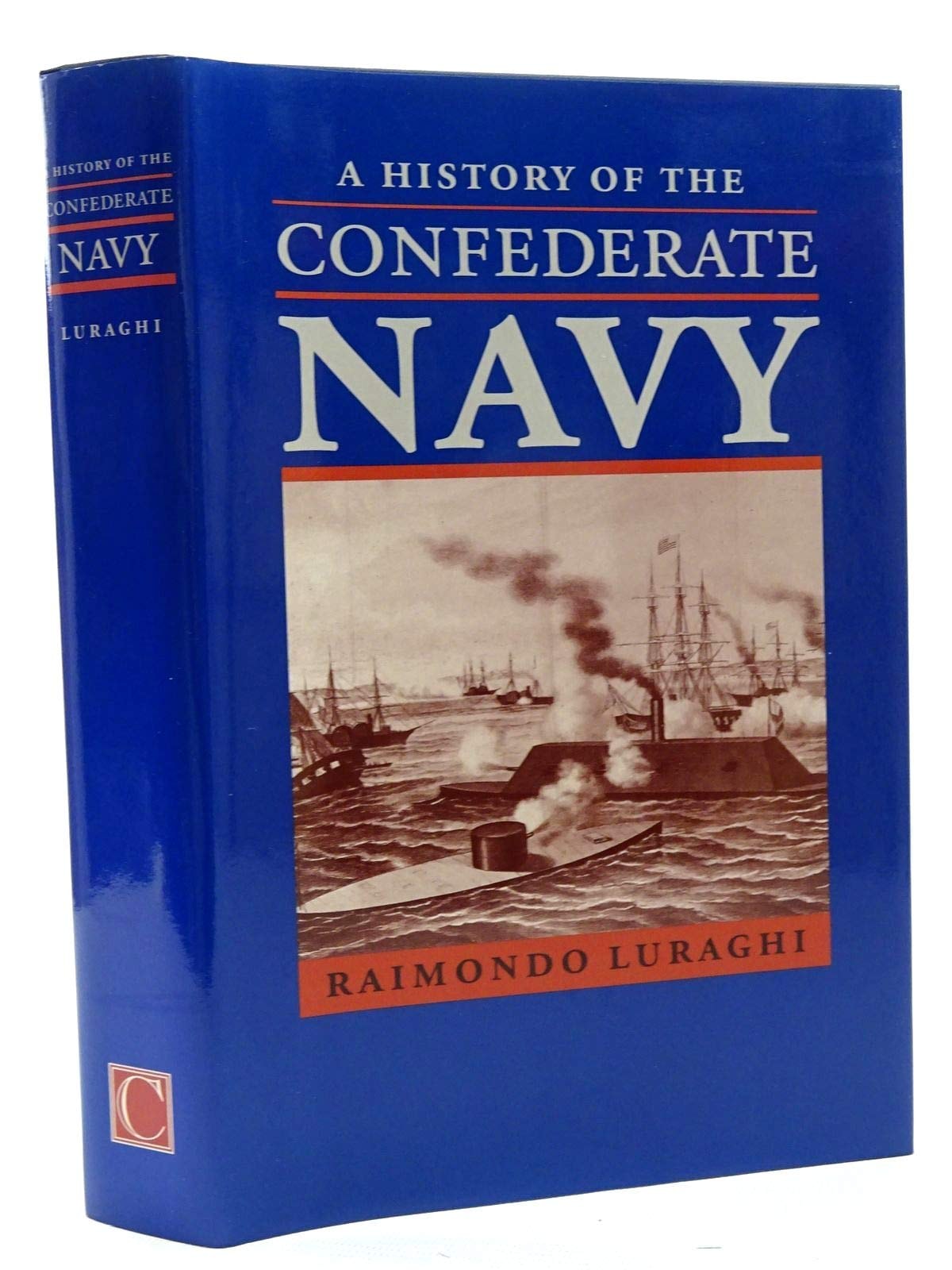
A History of the Confederate Navy
- Publisher
- Chatham Pub.
- Pages
- 514
- Language
- English
- Published
- 1996
Overview
Amazon.com Review<br/><br/>A History of the Confederate Navy is probably the only important book on the U.S. Civil War that was first written in Italian and then translated into English. Nonetheless, historian Raimondo Luraghi offers the fullest account to date of the South's naval activity. He challenges the popular notion that the Confederate navy was a failure because it did not break the North's blockade. Busting the blockade was not its main goal, Luraghi argues. Instead, the Confederate navy primarily wanted to prevent an amphibious invasion of the South--a mission in which it mostly succeeded. This particular interpretation is disputable, but the facts and figures of Luraghi's history are not. He shows how an agrarian people built a navy that managed to continue fighting several months after Lee's surrender at Appomattox, and on the whole made a good showing on the seas against an industrial superpower.<br/><br/>Product description<br/><br/>hardcover 1st edition; like new dust jacket (s9)<br/><br/>From Publishers Weekly<br/><br/>One of the most prominent European scholars of the Civil War weighs in with a provocative revisionist study of the Confederacy's naval policies. For 27 years, University of Genoa history professor Luraghi (The Rise and Fall of the Plantation South) explored archival and monographic sources on both sides of the Atlantic to develop a convincing argument that the deadliest maritime threat to the South was not, as commonly thought, the Union's blockade but the North's amphibious and riverine operations. Confederate Navy Secretary Stephen Mallory, the author shows, thus focused on protecting the Confederacy's inland waterways and controlling the harbors vital for military imports. As a result, from Vicksburg to Savannah to Richmond, major Confederate ports ultimately were captured from the land and not from the sea, despite the North's overwhelming naval strength. Luraghi highlights the South's ingenuity in inventing and employing new technologies: the ironclad, the submarine, the torpedo. He establishes, however, that these innovations were the brainchildren of only a few men, whose work, although brilliant, couldn't match the resources and might of a major industrial power like the Union. Nor did the Confederate Navy, weakened through Mallory's administrative inefficiency, compensate with an effective command system. Enhanced by a translation that retains the verve of the original, Luraghi's study is a notable addition to Civil War maritime history. Photos not seen by PW.<br/>Copyright 1996 Reed Business Information, Inc.<br/><br/>From Booklist<br/><br/>What may be the most valuable book yet written on the Confederate States Navy at last sees U.S. publication. Luraghi does not stint on the chronology, personal profiles, or anecdotes of the CSN's deeds, heroic and otherwise, yet his real strength lies in discussing the various influences on the Confederate decision to organize a navy at all, the efforts to overcome the South's weak industrial base, and the administration of the Conferacy's valiant if exiguous sea fighters. Luraghi also places the whole naval aspect of the Civil War in the larger context of High Victorian economics, technology, and naval strategic and tactical concepts--something very seldom done in a manner accessible to nonacademic readers. Such readers will still need a strong interest in and some background knowledge of the subject; this is not a book for tyros. It is, however, one for just about any significant Civil War or American naval collection. Roland Green
Posts about this book
No posts about this book yet. Be the first in the app!


