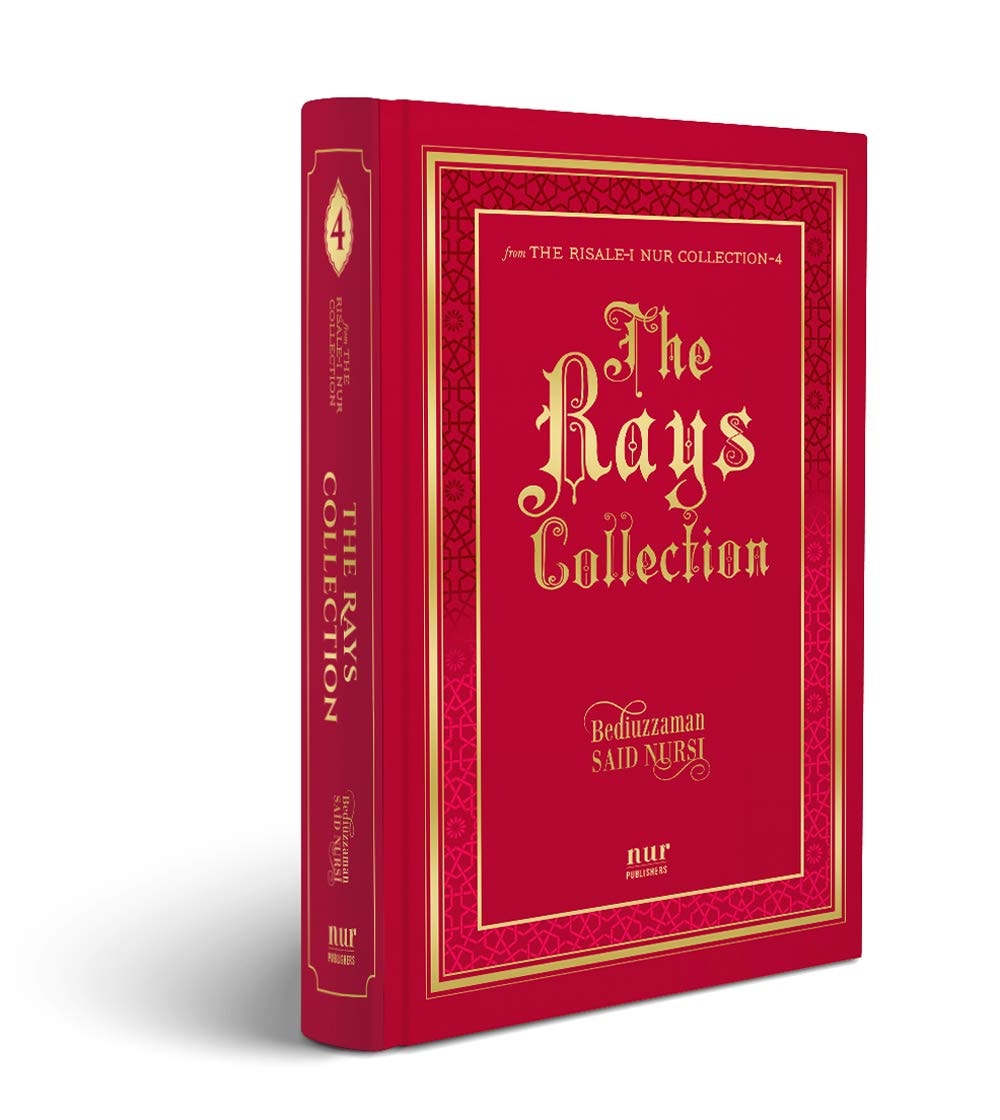
The Rays Collection, Translated by Sukran Vahide
- Publisher
- Nur Publishers
- Pages
- 684
- Language
- English
- Published
- 2019
Overview
Product Description <br/>With its fifteen pieces or 'Rays', THE RAYS COLLECTION contains some of the most important parts of the Risale-i Nur. Among these are The Supreme Sign, which in describing the testimony offered by all the realms of creation and universe to God's necessary existence and unity, is the most complete expression of the reflective thought which is the basis of the Risale-i Nur's way. Further convincing explanations and proofs of Divine unity and oneness, based also on recognizing and 'reading' the manifestations of the Divine Names in the universe, are set out in the Second, Third, and Fourth Rays. While in addition to these questions, The Fruits of Belief and The Shining Proof put forward clear, irrefutable proofs of the main 'pillars of belief.' Also included in this volume are parts of Bediuzzaman's defences in the Courts of Denizli and Afyon, and the short letters and notes he wrote his fellow-prisoner students while being held in those prisons. As well as advising them about their defences and directing the continuing work of the Risale-i Nur, for the most part these letters were written to guide, encourage, and comfort his students during their ordeals, to remind them to be cautious in the face of their enemies and above all to maintain their solidarity and strengthen their brotherly relations.<br/> About the Author <br/>Bediuzzaman Said Nursi was born a century ago, in 1873, in a village in eastern Anatolia, Nurs, from which he received the name Nursi. He received his basic education from the best-known scholars of the district. The extraordinary intelligence and capability of learning that he showed at a very early age made him popular with his teachers, colleagues and the people. When he was sixteen years old, he silenced the distinguished scholars who had invited him to a debate (debate was then a popular practice among scholars). This later recurred several more times with various groups of scholars, and he thereby began to be called Bediuzzaman (Wonder of the Age). The time he spent in education paved the way in his mind for the thought that at a time when the world was entering a new and different age, where science and logic would prevail, the classical educational system of theology would not be sufficient to remove doubts concerning the Qur'an and Islam. He concluded that religious sciences should be taught at modern schools on the one hand, and modern sciences at religious schools on the other. `This way,` he said, `the people of the school will be protected from unbelief, and those of the madrasa from fanaticism.` After completing a lifetime of almost a century, with every minute spent in the service of faith, Bediuzzaman Said Nursi departed from this world on the morning of March 23, 1960, with complete honor, dignity and victory, leaving behind him the Risale-i Nur Collection that would illuminate this and the forthcoming centuries and a love that would be handed over from generation to generation until eternity.
Posts about this book
No posts about this book yet. Be the first in the app!


