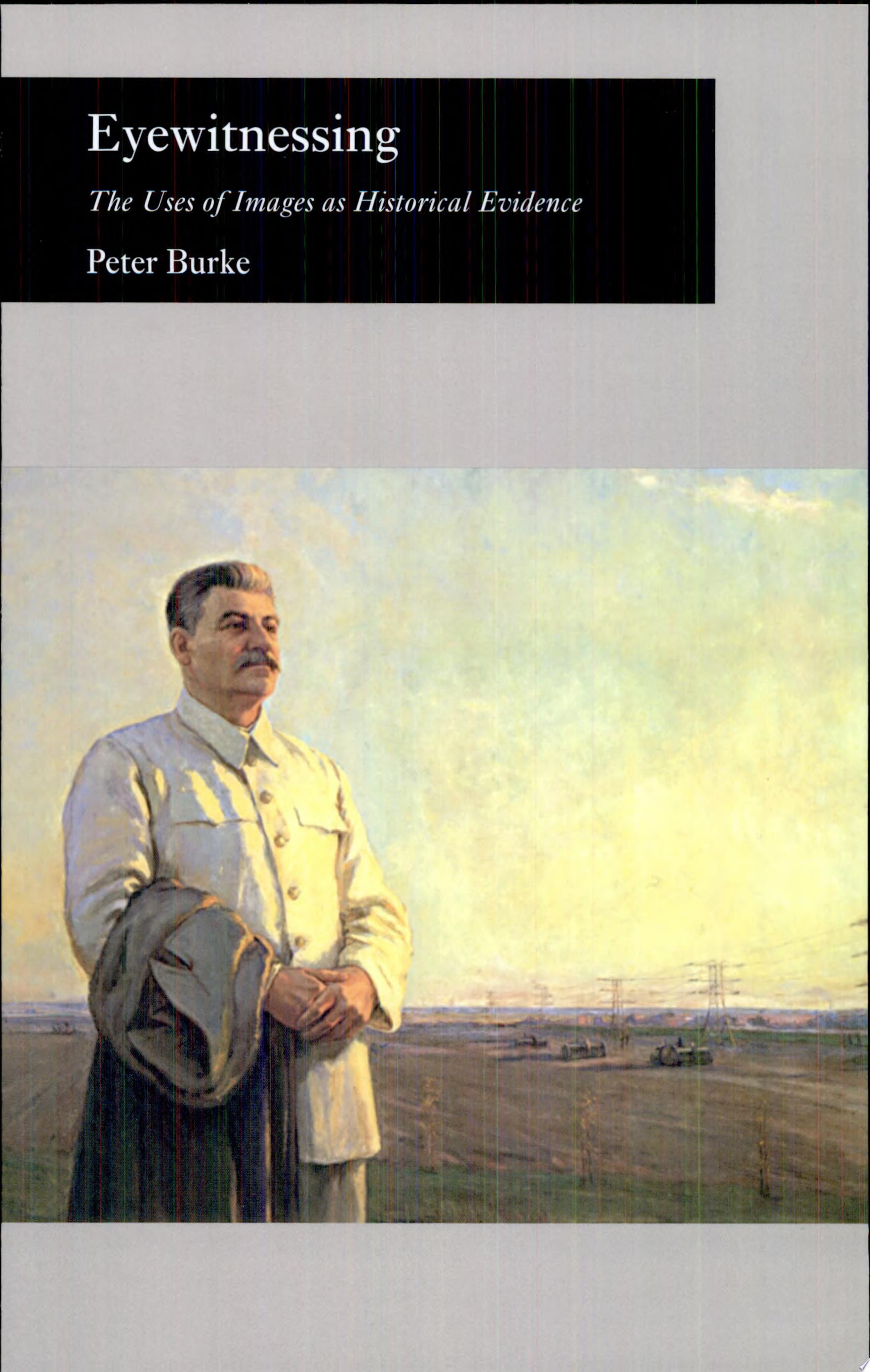
Eyewitnessing The Uses of Images as Historical Evidence
by Peter Burke
- Publisher
- Cornell University Press
- Pages
- 223
- Language
- English
- Published
- 2001
Overview
What place do images hold among other kinds of historical evidence? In Eyewitnessing, Peter Burke reviews graphics, photographs, films, and other media from many countries and periods and examines their pragmatic uses. This profusely illustrated book surveys the opportunities and the challenges of using images to understand other times. In a thorough and compelling defense of the importance of the visual to history, Burke argues that images should not be considered mere reflections of their time and place, but rather extensions of the social contexts in which they were produced. The author describes and evaluates the methods by which art historians have traditionally analyzed images, and finds them insufficient to deal with the complexities of visual imagery. In developing a richer mode of visual interpretation, Burke devotes much attention to religious icons and narratives and political propaganda posters, caricatures, and maps. Eyewitnessing also addresses the economics of images--some, such as films, are commodities in themselves, and others are created to advertise other products. Concentrating on the representation of social groups, the author explores stereotypes as well as notions of foreignness and gender. In this wide-ranging, highly accessible volume, Burke helps us to understand the promise and the pitfalls of using visual evidence in the writing of history.
Posts about this book
No posts about this book yet. Be the first in the app!


