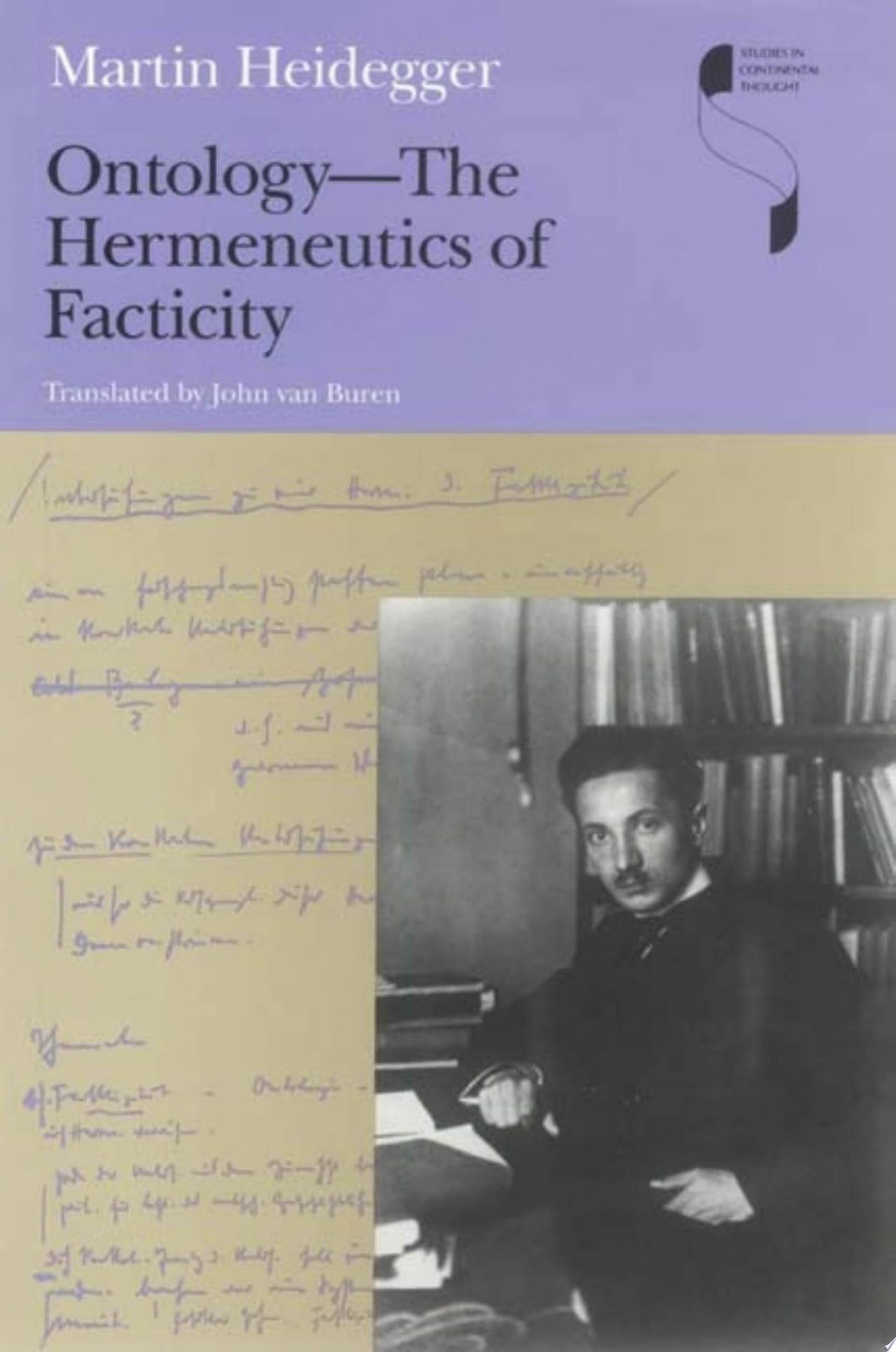
Ontology—The Hermeneutics of Facticity
- Publisher
- Open Road Integrated Media, Inc.
- Pages
- 152
- Language
- English
- Published
- 2008-08-18
Overview
This probing analysis of the history of ontology is "of enormous significance for students of the development of Heidegger's early thought" (Daniel O. Dahlstrom Boston University). First published in 1988 , Ontology—The Hermeneutics of Facticity is the text of Heidegger's lecture course at the University of Freiburg during the summer of 1923. In these lectures, Heidegger reviews and makes critical appropriations of the hermeneutic tradition from Plato, Aristotle, and Augustine to Schleiermacher and Dilthey. Through this critical survey, he reformulates the question of being on the basis of facticity and the everyday world. Specific themes deal with the history of ontology, the development of phenomenology and its relation to Hegelian dialectic, traditional theological and philosophical concepts of man, the present situation of philosophy, and the influences of Aristotle, Luther, Kierkegaard, and Husserl on Heidegger's thinking. Students of Heidegger will find initial breakthroughs in his unique elaboration of the meaning of human experience and the "question of being," which received mature expression in Being and Time.
Posts about this book
No posts about this book yet. Be the first in the app!


