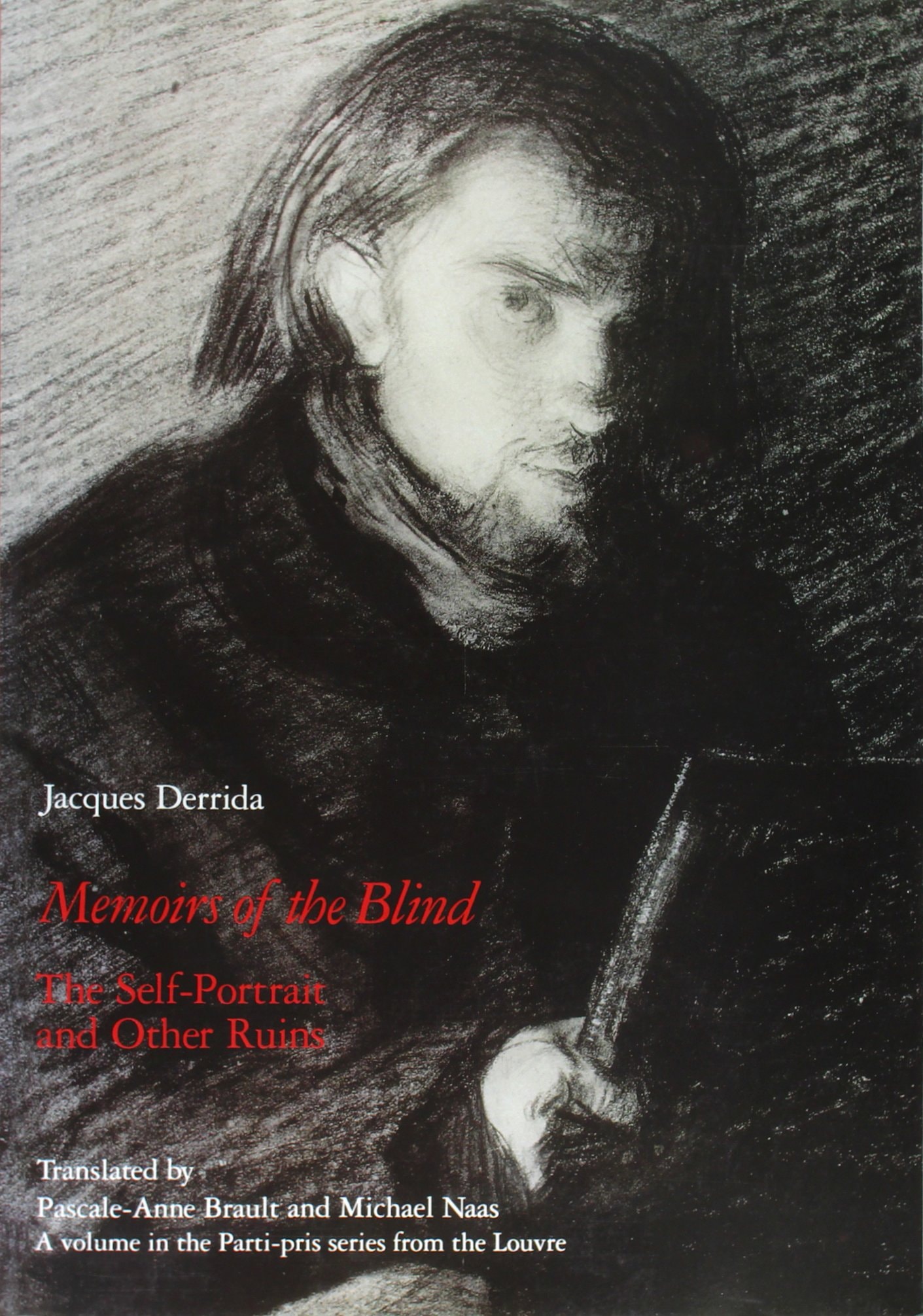
Memoirs of the Blind The Self-portrait and Other Ruins
- Publisher
- University of Chicago Press
- Pages
- 141
- Language
- English
- Published
- 1993
Overview
In this brilliant essay, Jacques Derrida explores issues of<br> vision, blindness, self-representation, and their relation to<br> drawing, while offering detailed readings of an extraordinary<br> collection of images. Selected by Derrida from the prints<br> and drawings department of the Louvre, the works depict<br> blindness--fictional, historical, and biblical. From Old<br> and New Testament scenes to the myth of Perseus and the<br> Gorgon and the blinding of Polyphemus, Derrida uncovers in<br> these images rich, provocative layers of interpretation.<br> <br> For Derrida drawing is itself blind; as an act rooted in<br> memory and anticipation, drawing necessarily replaces one<br> kind of seeing (direct) with another (mediated). Ultimately,<br> he explains, the very lines which compose any drawing are<br> themselves never fully visible to the viewer since they exist<br> only in a tenuous state of multiple identities: as marks on<br> a page, as indicators of a contour. Lacking a "pure"<br> identity, the lines of a drawing summon the supplement of the<br> word, of verbal discourse, and, in doing so, obscure the<br> visual experience. Consequently, Derrida demonstrates, the<br> very act of depicting a blind person undertakes multiple<br> enactments and statements of blindness and sight.<br> <br> <i>Memoirs of the Blind</i> is both a sophisticated<br> philosophical argument and a series of detailed readings.<br> Derrida provides compelling insights into famous and lesser<br> known works, interweaving analyses of texts--including<br> Diderot's <i>Lettres sur les aveugles</i>, the notion of<br> mnemonic art in Baudelaire's <i>The Painter of Modern</i><br> <i>Life</i>, and Merleau-Ponty's <i>The Visible and the</i><br> <i>Invisible</i>. Along with engaging meditations on the history<br> and philosophy of art, Derrida reveals the ways viewers<br> approach philosophical ideas through art, and the ways art<br> enriches philosophical reflection.<br> <br> An exploration of sight, representation, and art,<br> <i>Memoirs of the Blind</i> extends and deepens the<br> meditation on vision and painting presented in <i>Truth and</i><br> <i>Painting</i>. Readers of Derrida, both new and familiar, will<br> profit from this powerful contribution to the study of the<br> visual arts.
Posts about this book
No posts about this book yet. Be the first in the app!


