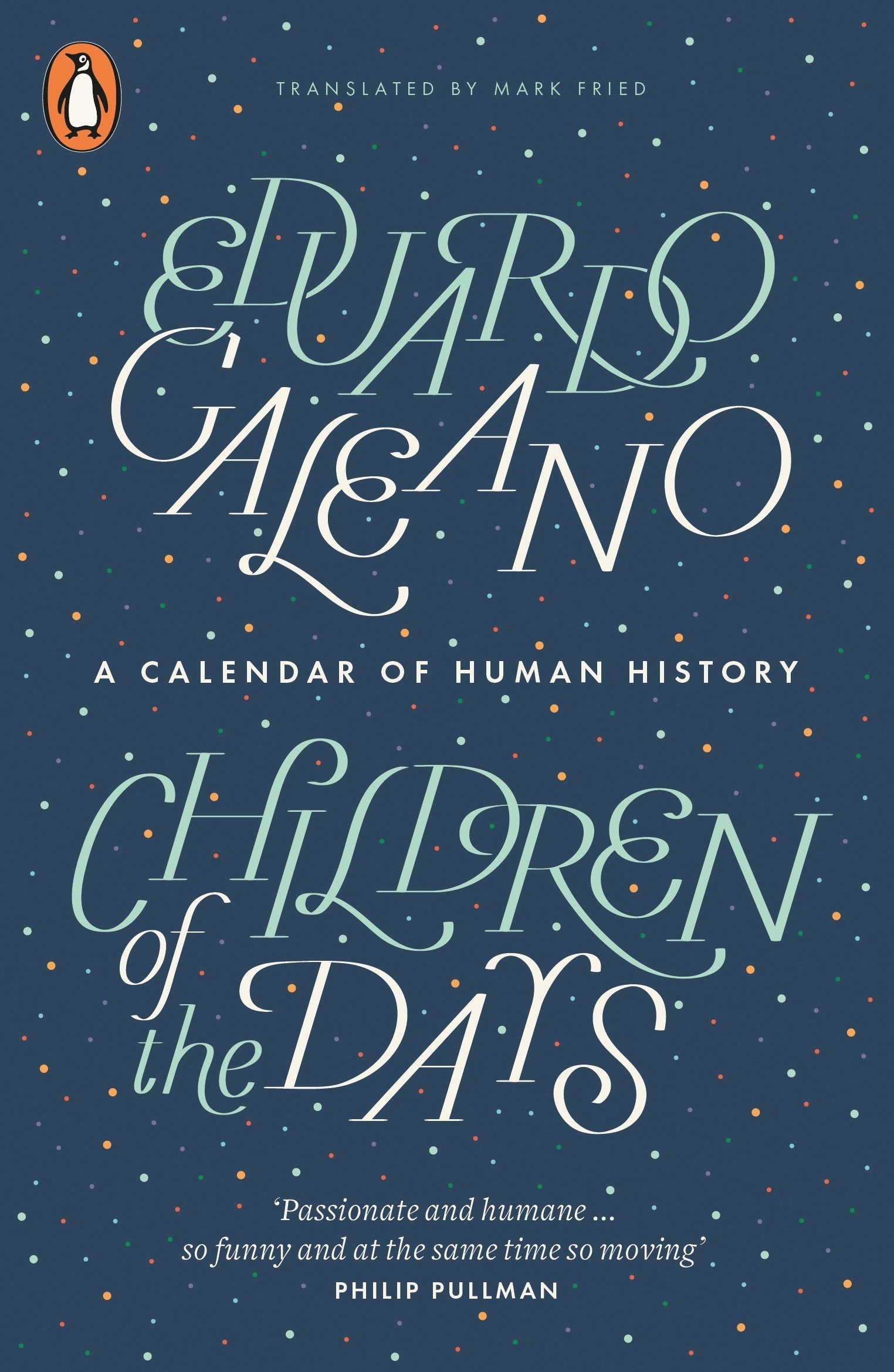
Children of the Days A Calendar of Human History
- Publisher
- Penguin Books
- Pages
- 448
- Language
- English
- Published
- 2014
Overview
<p><b>From Eduardo Galeano, one of Latin America's greatest living writers, author of the <i>Memory of Fire </i>trilogy, comes <i>Children of the Days, </i> a new kind of history that shows us how to remember and how to live<br></b><br>This book is shaped like a calendar. Each day brings with it a story: a journey, feast or tragedy that really happened on that date, from all possible years and all corners of the world. From Abdul Kassem Ismail, the tenth-century Persian who never went anywhere without his library - all seventeen thousand books of it, on four hundred camels; to the Brazilian city of Sorocaba, which on February 8 1980 responded to the outlawing of public kissing by becoming one huge kissodrome; to July 1 2008, the day the US government decided to remove Nelson Mandela's name from its list of dangerous terrorists, <i>Children of the Days</i> takes aim at the pretensions of official history and illuminates moments and heroes that we have all but forgotten. Through this shimmering historical mosaic runs a common thread, one that joins humanity's darkest hours to its sweetest victories. <i>Children of the Days</i> is the story of our lives. <p>'Passionate and humane ... so funny and so moving' - Philip Pullman <p>'Galeano performs the sort of extraordinary feats of compassion, artistry, and imagination achieved in fiction by his fellow visionary Latin American writers, especially Borges, García Márquez, and Bolaño' - <i>Booklist</i>, starred review <p>Eduardo Galeano is one of Latin America's most distinguished writers. He is the author of the three-volume <i>Memory of Fire; Open Veins of Latin America; Soccer in Sun and Shadow; The Book of Embraces; Walking Words; Upside Down; and Voices in Time</i>. Born in Montevideo in 1940, he lived in exile in Argentina and Spain for years before returning to Uruguay. His work has been translated into twenty-eight languages. He is the recipient of many international prizes.</p>
Posts about this book
No posts about this book yet. Be the first in the app!


