
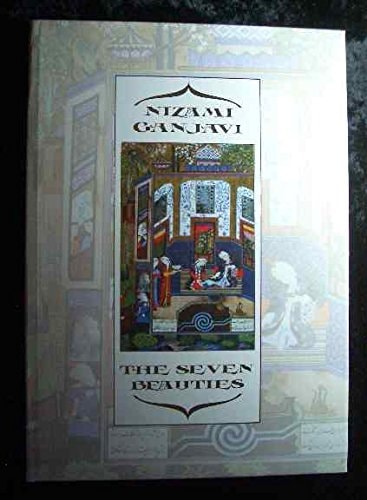
Original bdg. HC. 4to. (27 x 20 cm). In English. 197, [4] p., color ills. The seven beauties; containing the life and adventures of King Bahram Gur and the seven stories told him by his seven queens. [ The Book of Bahram] (Probsthain's Oriental Series Vol. XII). Translated by C. WE. Wilson, B.A. "The fourth of Niami's treasures, The Seven Beauties (1196) has its own special place in the poet's output, due to itss unusual structure, and its social and psychological approach.". Charles Edward Wilson, (1858-1941) began the study of Persian in early youth. First assisted by Jules Mohl, and afterwards by N. de KhanikofF, S. Guyard, and Professor Palmer. From natives of Persia acquired a thorough knowledge of the colloquial. The seven beauties also known as Bahramnameh (The Book of Bahram, referring to the Sasanian king Bahram Gur) is a romantic epic by Persian poet Nizami Ganjavi written in 1197. This poem is a part of the Nizami's Khamsa. The original title in Persian Haft Peykar can be translated literally as "seven portraits" with the figurative meaning of "seven beauties". Both translations are meaningful and the poet doubtless exploited intentionally the ambiguity of the words. The poem was dedicated to the Ahmadili ruler of Maragha, Ala-al-Din Korpe Arslan bin Aq-Sonqor. The poem is a masterpiece of erotic literature, but it is also a profoundly moralistic work.
No posts about this book yet. Be the first in the app!


