
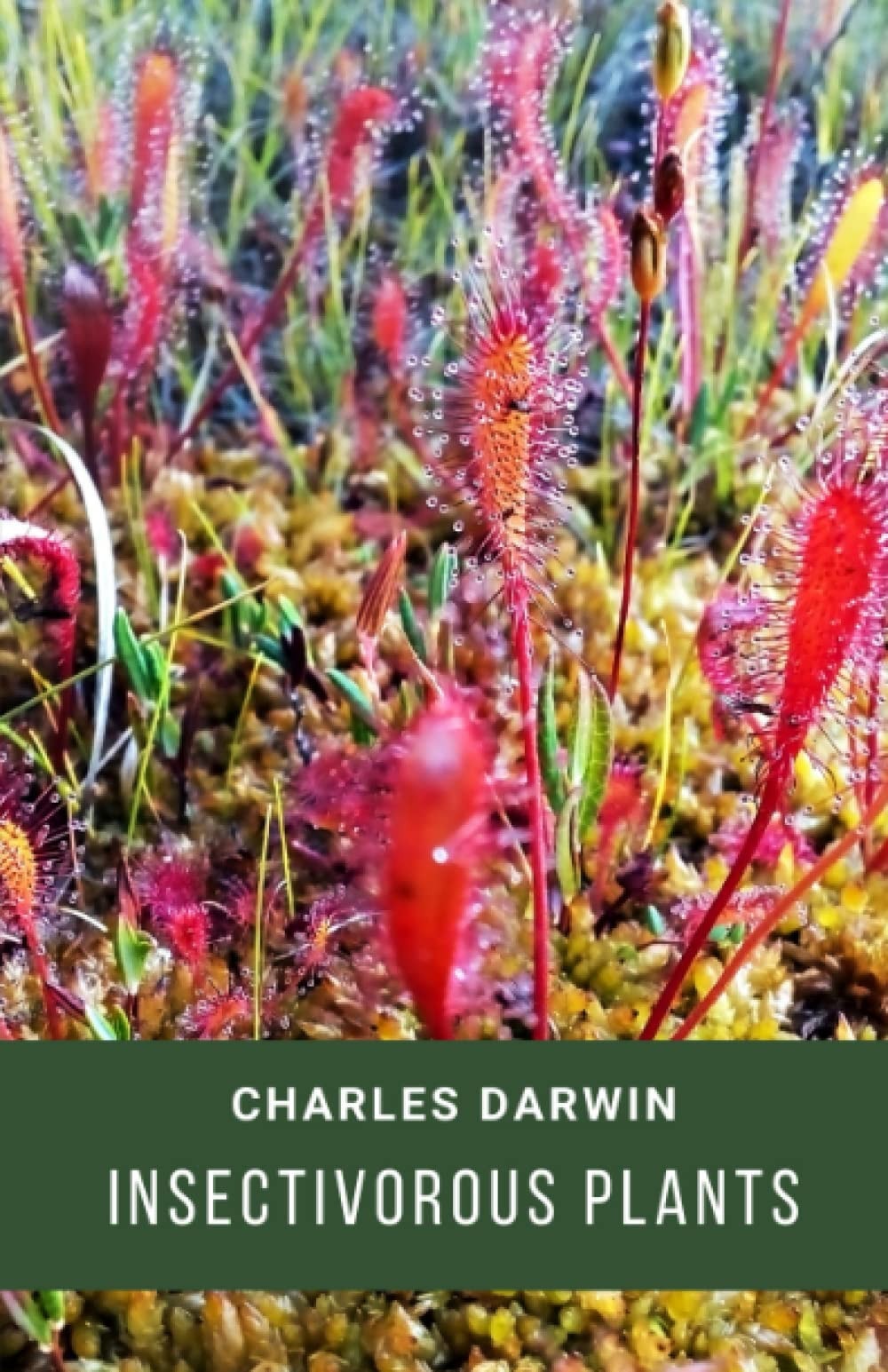
Unique Elements<br/>19th Century Historical Outline<br/>About<br/>Insectivorous Plants is a botany book written by Charles Darwin, a British scientist and evolutionary theory pioneer. It was first published in 1875. The book, which is part of a sequence of publications by Darwin relating to his theory of natural selection, is a study of carnivorous plants, with special emphasis on the adaptations that allow them to exist in harsh situations.<br/>He discovered and examined round-leaved sundews blooming abundantly in the heaths of Sussex. Darwin gave ammonia salts, egg white, and even little cheese crumbs to sundew plants before detailing their digestive processes and showing, clearly and for the first time, that carnivory exists in the plant world.<br/>In this classic work on carnivorous plants, Darwin explains how these fascinating plants capture, digest, and benefit from their prey through a combination of observations and very clear experiments, noting that while some plants have distinct trap-like structures, others create sticky secretions to catch their prey, concluding that this was an example of natural selection pressure leading to different techniques of food capture.<br/><br/>A Classic Reprint<br/>This Botany Book will make an excellent gift to the evolutionary biology buff in your life or a fantastic addition to your own classic’s library. Century Bound takes every care to ensure that the original integrity of this book has been preserved to the highest degree. This means that the texts in this story are unedited and unaltered from the original author's publication, keeping the books’ original form for your enjoyment.
No posts about this book yet. Be the first in the app!


