Book Tips
How to Read More Books This Year Without Forcing It
· 8 min read
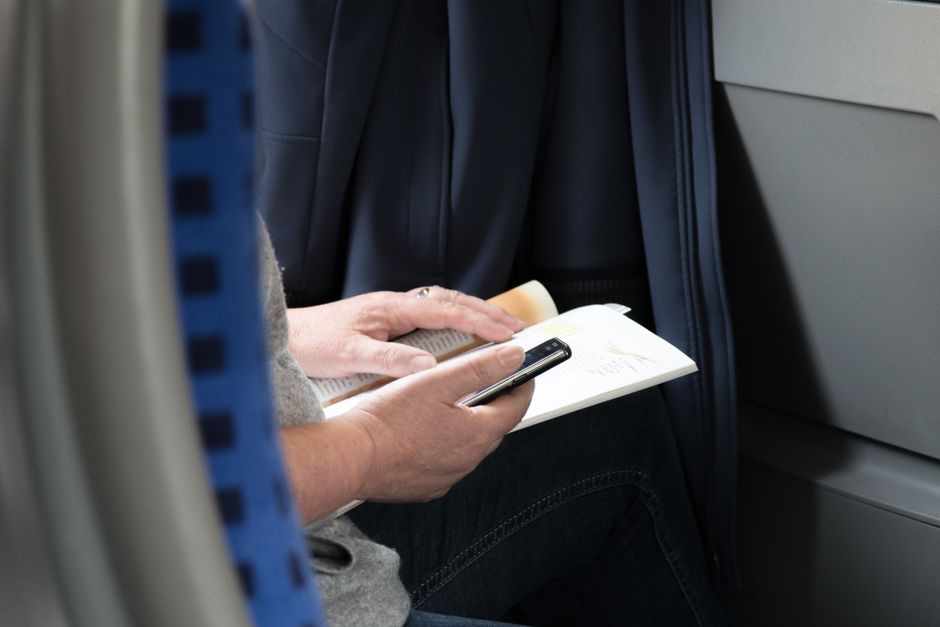
Every January, some version of the same resolution makes the rounds: this is the year I finally read more. We picture cosy evenings with a tall stack of novels, a warm drink, and a mind that slows down enough to actually enjoy them. Then February arrives, the bookmark still hasn't moved past page twelve, and a familiar guilt quietly settles in over the gap between the reader we meant to be and the one we actually were. If that deflating cycle feels painfully familiar, here is the genuinely reassuring truth: the problem almost certainly isn't your discipline, your intelligence, or your attention span. It is the plan itself. Nobody ever taught us that reading more is something you engineer rather than something you simply resolve to do, and that one missing idea is what quietly sinks the resolution year after year.
Reading more has surprisingly little to do with reading faster or magically clearing your calendar. The people who quietly finish forty or fifty books a year rarely possess some rare gift of laser focus or a secret ocean of free time that the rest of us lack. They have simply arranged the small details of their days so that reading becomes the easy, obvious thing to reach for in the little gaps most of us fill, almost unconsciously, with a screen. Read that sentence again, because it genuinely changes everything: reading more is a design problem, not a willpower problem. Willpower is exhausting, finite, and unreliable, and any plan that leans on it will fail you by February. Design, by contrast, works quietly in the background whether you feel motivated on a given evening or not. Fix the design, and the books very nearly take care of themselves.
Make Reading the Path of Least Resistance
Human behaviour follows friction, and books usually lose to phones for one simple reason: phones are frictionless and books are not. If your current read is buried at the bottom of a bag or charging in another room while your phone sits warm in your palm, the phone will win every single time, not because you are weak or shallow, but because it is genuinely easier in that moment. The fix is not to shame yourself into better choices; it is to lower the friction on the side you want to win. So stack the deck in reading's favour everywhere you can. Leave a book on your pillow, another on the kitchen table, and a third permanently in your bag. Put a reading app where a social app used to sit on your home screen. The goal is that whenever a spare five minutes appears, a book is already within arm's reach, so picking it up requires no decision, no searching, and no effort at all.
Trade a Slice of Scroll Time for Page Time
You don't need to find an extra hour in the day, which is a relief, because you almost certainly don't have one to spare. What you need instead is to reclaim the minutes you are already spending without noticing them slip away. The average person spends well over two hours a day on their phone, and a large share of that is aimless, half-conscious scrolling that leaves you feeling more drained rather than genuinely rested. You don't have to give it up entirely or declare all-out war on your own habits, which never works anyway. You just have to redirect a modest slice of it. Swapping even thirty minutes of scrolling for reading adds up to hundreds of pages every month, and unlike the endless scroll, those pages leave you feeling calmer, more focused, and more like yourself. The small tactics below are designed to make that swap feel almost automatic rather than effortful.
- Read at least two pages before sleep every single night; most evenings that tiny start quietly pulls you into far more than you planned.
- Move your social apps off the home screen and put a reading or ebook app in the exact spot your thumb reaches for out of habit.
- Deliberately fill the in-between moments: the boiling kettle, the morning commute, the waiting room, the slow checkout queue.
- Set a laughably small daily minimum, like ten pages, so that starting never once feels like a mountain you have to climb.
- Anchor your reading to a habit you already have, such as your morning coffee, your lunch break, or the train ride home.
- Keep an audiobook queued and ready for chores, walks, and workouts, so that otherwise dead time quietly becomes story time.
- End your day with a chapter instead of one last scroll; your sleep, your mood, and your page count will all thank you.
- Keep a spare book in your bag at all times, so an unexpected delay turns into a small gift rather than a frustration.
Never Be Without a Book
The single most powerful reading habit there is happens to be almost embarrassingly simple: never be without a book. Physical, ebook, or audio - the format genuinely does not matter here, and mixing all three is even better than committing to one. When a book travels everywhere you go, all the dead time in an ordinary day is quietly transformed into something valuable. The ten wasted minutes in a waiting room become a chapter. The daily commute becomes a third of a novel every week. The queue at the pharmacy becomes three more pages you would otherwise never have read. None of these individual moments feel like reading time in the traditional, cosy-armchair sense, and that is precisely why the trick works so well. They ask nothing extra of your schedule and demand no sacrifice, yet they accumulate into whole finished books far faster than you would ever believe possible from such small and scattered scraps.
“You don't need more time to read. You need to notice the time you already waste, and quietly put a book there instead.”
Track Your Reading, But Keep It Kind
A simple log does two genuinely useful things for a growing reading habit. First, it shows you real, visible progress on the discouraging days when it honestly feels like you are getting nowhere at all. Second, it gently nudges you to line up the next book before your momentum quietly fades in that dangerous gap between finishing one and starting another. It does not matter in the slightest whether that log lives in a note on your phone, a battered paper journal, or a shelf on Bookspace. What genuinely matters is that you keep it light and forgiving. The very moment the tracker starts to feel like a scoreboard you are somehow losing, it has begun working against you rather than for you. The number of books is only ever a happy byproduct of a life with more reading quietly folded into it - it was never the actual point of the exercise, and treating it as such reliably drains the joy right out.
Finally, remember that reading is far more fun when it is shared with other people. Telling a friend what you are loving right now, comparing notes on a book you both devoured, or simply seeing what the people you trust genuinely cannot put down turns a solitary habit into something you actively look forward to returning to. Momentum is so much easier to sustain when you are not quietly carrying it entirely alone. So pick just one or two ideas from this article, not all of them at once, and let them settle into second nature before you add anything else on top. Do that patiently, and the vague wish of I really want to read more slowly, almost without your noticing, turns into the quiet, delighted realisation that you cannot believe how much you have actually read.
Discover what everyone's reading right now →#Reading Habits #Motivation #Productivity