Book Tips
How to Read Two Books at Once Without Losing the Plot
· 8 min read
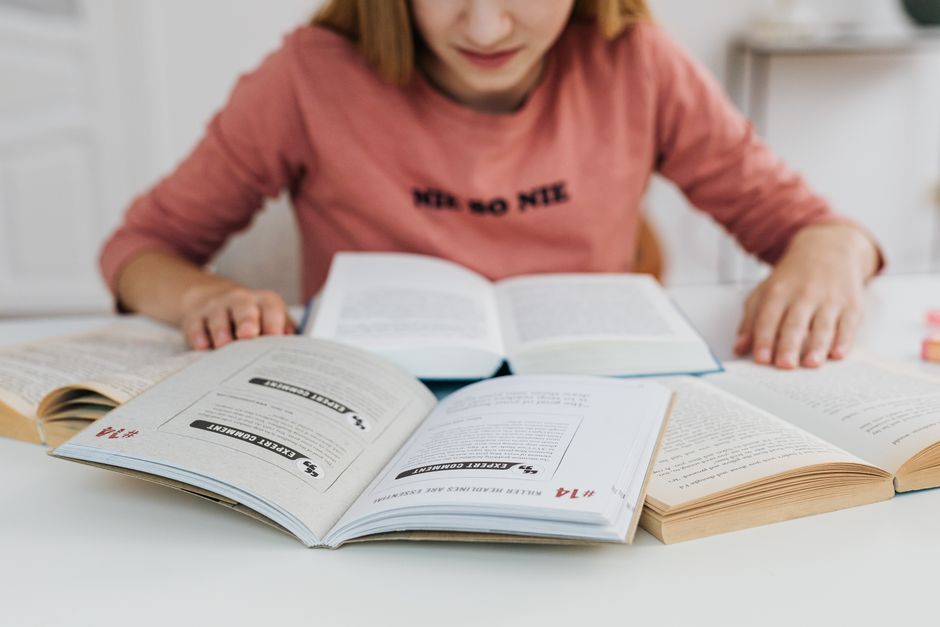
Some readers treat strict monogamy with their books as an unbreakable moral rule: one book at a time, read faithfully from cover to cover, absolutely no exceptions ever permitted. Others always have three or four different books quietly on the go at once, and yet feel faintly and needlessly guilty about it, as though this habit were somehow shameful proof of a wandering, scattered, undisciplined sort of mind. So if you have ever privately wondered whether reading several books at the very same time is actually allowed and permitted, here is the short, cheerful, and reassuring answer: yes, absolutely it is, and done thoughtfully it might genuinely make you a noticeably better and happier reader overall.
Reading in parallel across several books is emphatically not some focus problem to be diagnosed and corrected out of you. It is a genuine, deliberate strategy that a great many prolific, serious, lifelong readers quietly swear by and would never willingly give up. The real trick, the thing that separates the joyful version from the confusing one, is simply to do it consciously and on purpose rather than sloppily by accident, so that your chosen books actively complement one another instead of blurring together into one confusing, indistinct soup in your memory. Get the specific combination genuinely right, and you will always have the perfect book already on hand for whatever mood, whatever energy level, and whatever odd spare moment you happen to find yourself in - which, as it turns out, is the real and unglamorous secret behind reading a genuinely large number of books each year.
Why Reading Several Books Works
Different books quite genuinely ask for entirely different kinds of attention from you, and your own personal capacity for each of those kinds rises and falls quite dramatically throughout the course of an ordinary day. A dense, demanding, closely argued work of non-fiction might be absolutely perfect for a sharp, well-rested, focused morning, yet completely and utterly impossible to face at midnight, when a light, warm, propulsive novel is instead exactly what your tired and depleted brain can actually manage. Deliberately reading several books at once simply means that you always have a genuine match ready for your current energy level, whatever that level happens to be at the time. And that, in its turn, means that you keep on reading something, anything, rather than stalling out completely and helplessly on the single demanding book that you simply cannot face tonight. The grim and all-too-familiar alternative, of course, is the depressing sight of one lonely, difficult book quietly killing your entire reading momentum stone dead for a whole month.
The Golden Rule: Contrast, Don't Compete
The one single mistake that reliably and completely ruins parallel reading for people is thoughtlessly choosing books that are far too similar to each other in the first place. Two intricate, ambitious literary novels, each with a sprawling cast of characters and overlapping historical settings, will very nearly always end up bleeding messily together in your memory and leaving you genuinely confused about who exactly did what, and where, and in which book. The clean solution to this whole problem is deliberate, conscious contrast between your simultaneous reads. Consciously pair books that are clearly and obviously different from one another in genre, in form, or in overall tone, so that your busy brain naturally and effortlessly files each of them away in its own separate mental drawer and never once mixes the two up. So: one fiction and one non-fiction. One heavy and demanding, one light and easy. One on paper at your desk, and one playing in your ears out on the move. The greater and starker the contrast you build between them, the more genuinely effortlessly you will keep both of them perfectly and clearly straight in your head.
- Pair one novel with one work of non-fiction, so that the two of them never blur together in your memory.
- Mix up the formats deliberately: a print book kept at home, an audiobook for the commute, an ebook for travel.
- Contrast the tone on purpose - something demanding and effortful for mornings, something easy and warm for late nights.
- Keep the total number small and honest; two or three books at once is comfortably manageable, but six is pure chaos.
- Assign each book its own natural context: the gym book, the bedtime book, the weekday lunch-break book.
- Choose books set in different places or eras, so that the fictional worlds themselves never overlap or bleed together.
- Let one be a slow, ambitious, long-term project and the other a quick, satisfying, genuinely finishable read.
- Keep a physical or mental note of where each book sits, so returning to one after days away never feels disorienting.
Match Books to Moods and Moments
The genuine art of reading well in parallel lies in thoughtfully giving each of your current books its own natural home somewhere within the actual shape and rhythm of your day. So let the meaty, demanding non-fiction live openly on your desk, ready for those sharp, focused morning stretches when your mind is at its clearest. Let the absorbing novel wait quietly and patiently on the nightstand, saved for gently winding down at the very end of the night. Let the audiobook ride companionably along with you on your walks, your commutes, and your endless household chores. Once each individual book has clearly claimed its own dedicated slot and its own recurring moment in the day, you gradually stop actively choosing between them at all, and instead simply start flowing naturally and unconsciously from one context straight into the next. You will honestly be genuinely amazed at just how much more you actually manage to finish across the year once no single book is unfairly forced to carry every single mood and every single spare hour entirely on its own.
“Reading several books at once isn't scattered. It's having exactly the right book ready for every version of you that shows up across a single day.”
When to Stick to One
Parallel reading is genuinely a useful tool and never an ironclad law, and some rare and special books rightly demand your complete, undivided, undiluted devotion in return for what they give you. A sweeping, fully immersive novel that you are honestly and completely lost inside of absolutely deserves your monogamy, and you really should not thoughtlessly dilute that rare and precious spell by splitting your attention across other, lesser things. Equally and just as importantly, if you ever start to notice that you are genuinely losing important plot threads, steadily forgetting who characters are, or simply making no real forward progress on anything at all across the board, then that is your clear and unmistakable signal to simplify things right down and drop gratefully back to just one single book for a while until the fog lifts. The entire and only real goal of any of this, remember, is always more joyful, more sustained, more consistent reading - and never, ever some pointless personal record for the sheer number of books you can juggle at once.
So go ahead and actually try it out this coming week, with just one careful, thoughtful, well-chosen pairing to start: one genuinely immersive novel alongside one dip-in-anytime work of non-fiction, ideally kept in two clearly different formats to help your brain tell them apart. Then simply pay close attention to how you now always seem to have something appropriate and appealing to reach for, and to how very rarely you now stall out completely with nothing at all that you actually feel like reading. Done with even just a little conscious intention behind it, reading two good books at once comfortably and reliably beats grimly reading one single book that you keep abandoning, half-finished and resented, to gather dust on the nightstand.
Explore world literature to pair with your next read →#Reading Strategy #Habits #Focus